What Is BDSM? Meaning, Consent & Common Misconceptions
BDSM is an umbrella term for a range of consensual interests involving restraint, agreed rules, power exchange, or particular sensations. For some adults, it is part of their sexuality. For others, it is about a relationship dynamic, personal expression, or curiosity rather than sex itself.
You do not need to enjoy pain, adopt a role, or own any equipment to understand BDSM. A useful starting point is knowing what the terms mean, what they do not tell you about a person, and why every participant’s choices remain their own.
What does BDSM stand for?
BDSM brings together three overlapping groups of terms: bondage and discipline, dominance and submission, and sadism and masochism. These describe different interests, not a checklist. Someone may identify with one aspect and have no interest in the others.

Bondage and discipline
Bondage refers to restriction of movement. Discipline refers to agreed rules or expectations within a particular dynamic.
The two are often grouped together, but they are not interchangeable. An interest in rules does not imply an interest in restraint, and owning restraint equipment does not establish consent to use it.
Restrictions on movement can also affect someone’s ability to communicate or leave a situation. An introductory definition is not enough preparation for using restraints, and a product’s appearance does not establish its suitability.
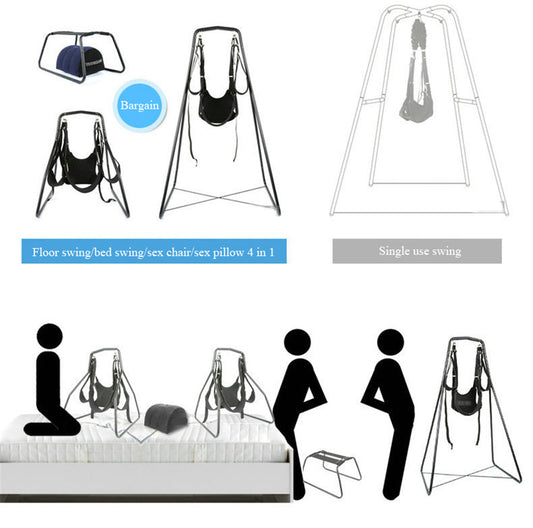
If you are comparing bondage and BDSM restraint gear, look for clear dimensions, fastening and removal information, and manufacturer instructions rather than choosing by appearance alone.
Dominance and submission
Dominance and submission, often written as D/s, refers to an agreed exchange of authority within defined boundaries.
A dominant role does not give someone unrestricted control. A submissive role does not remove someone’s right to disagree, ask questions, change their mind, or stop.
These roles are not determined by gender, sexual orientation, physical size, income, or personality outside the agreed context. Some people prefer one role, some enjoy different roles in different circumstances, and others do not find these labels useful.
Sadism and masochism
In a consensual BDSM context, sadism and masochism refer to interests in giving or receiving particular forms of discomfort or intense sensation.
These labels do not explain exactly what someone enjoys or agrees to. They are never permission to assume another person’s limits.
You can be interested in BDSM without being interested in pain. You can also be curious about a sensation without wanting a power-exchange dynamic.
Is BDSM the same as kink?
The terms overlap, but they are not exact synonyms.
“Kink” is a broader, context-dependent term for interests or expressions that someone considers outside conventional expectations. BDSM describes a more specific group of interests within that broader territory.
Neither label tells you what a person wants to do. Asking what a term means to them is more useful than assuming you share the same definition.
What consent means in BDSM
Consent is not something a role, relationship, or previous experience can supply on someone else’s behalf. It needs to be freely given and specific to what is being discussed.
Agreement to one thing is not agreement to everything around it. Someone might welcome a particular word but dislike another, accept one accessory but decline another, or feel differently on another day.
A useful conversation makes room for questions such as:
- What interests you, and what does not?
- What is off limits?
- What are you unsure about?
- What would require a separate conversation?
- How would you like to pause or stop?
- What support or space might you want afterward?
“I don’t know” is a reason to leave something undecided, not an invitation to persuade. Someone should be able to decline without punishment, guilt, or pressure to prove their trust.
Consent also remains changeable. Agreeing beforehand does not create an obligation to continue.
Boundaries, limits, and changing your mind
People sometimes use “hard limit” to describe something they do not agree to. Other preferences may depend on context, while some interests remain uncertain.
The purpose of discussing limits is understanding, not negotiation toward an eventual yes. An uncertain preference is not a challenge to overcome.
Boundaries can concern much more than physical activity. They may include language, privacy, photographs, who is present, or whether anything is discussed afterward with other people.
Changing a boundary is not a failure to follow through. It is new information that needs to be respected.
What is a safeword?
A safeword is an agreed word used to communicate a pause or stop. Some people also discuss nonverbal signals when speech may be difficult.
These agreements can support communication, but they have limits. A person may freeze, become overwhelmed, or be unable to produce a signal. A signal may also be missed.
Not hearing a safeword is not proof of continuing consent. Ordinary expressions such as “no” or “stop” do not become irrelevant because another word was discussed. If willingness or communication is unclear, stop rather than assuming permission.
A safeword is a communication tool, not a guarantee against harm.
What is aftercare?
Aftercare means the support, space, or practical care someone may want following an experience.
It does not look the same for everyone. One person may want reassurance or conversation; another may prefer quiet, personal space, or a check-in later. These preferences are worth discussing rather than assuming.
Aftercare can also include a later conversation about what felt welcome, what did not, and what should change.
It cannot make an unwanted experience consensual after the fact, and it does not replace attention to someone’s boundaries during an interaction.
Common misconceptions about BDSM
BDSM always involves pain
Pain is not a requirement. Interests in roles, rules, restraint, and sensation can exist separately.
Submission means giving up your voice
An agreed role does not remove personal agency. Questions, limits, and withdrawal of consent still matter.
Dominant people must always take charge
A role is not a personality test. Someone’s preferences in one context do not dictate how they behave in work, relationships, or everyday decisions.
You need an elaborate collection of toys
Equipment is optional. Buying a product does not establish readiness, shared interest, or knowledge of its limitations.
More intense means more experienced
Intensity is not a measure of trust, skill, or relationship quality. Choosing not to participate is as valid as choosing to explore an interest.
Consent makes every activity safe
Consent is essential, but it does not remove physical or emotional risks. Communication cannot substitute for relevant knowledge, suitable equipment, or an understanding of limitations.
Do you need BDSM toys?
No. Learning the vocabulary or discussing preferences does not require a purchase.
If you do consider an accessory, start with what you can verify: its intended purpose, dimensions, materials, adjustment or removal features where relevant, and care instructions.
Descriptions such as “beginner-friendly,” “comfortable,” or “premium” do not answer those questions on their own. If important information is missing, ask for clarification rather than filling the gaps with assumptions.
For an overview of available accessories, browse LustBond’s BDSM collection and compare individual product details against the preferences and limits you have discussed. Browsing does not create an obligation to buy or participate.
The point is not to assemble a complete kit. It is to make a considered choice about whether a particular item belongs in your plans at all.
Where to begin
Begin with a conversation rather than an expectation.
You might say: “I’ve been reading about BDSM, and I’m curious what the term means to you. Is that something you would like to talk about?”
That leaves room for interest, uncertainty, or a simple no. There is no required next step, no role you have to adopt, and no progression you need to follow.
Understanding BDSM starts with vocabulary. Deciding what, if anything, belongs in your life starts with your own preferences and respect for everyone else’s choices.